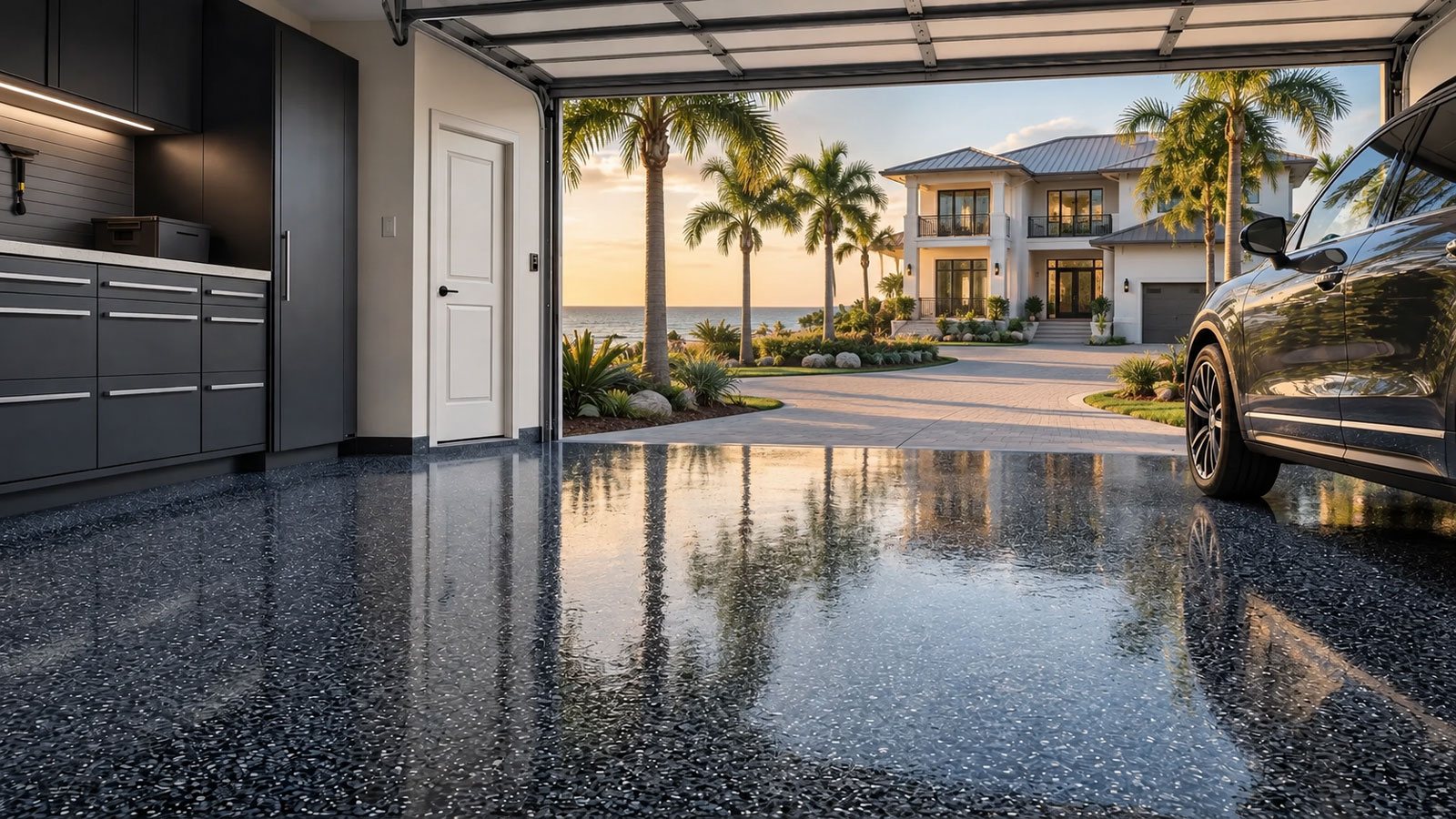
Garage Floor Coating in North Charleston, SC
Floor Coating Services in North Charleston, SC
North Charleston is a major residential, employment, industrial, and commercial part of the Charleston metro. That mixed property context means a project may involve a home garage, a work area, or another concrete surface with different traffic and preparation needs. North Charleston's varied residential and commercial concrete-use context makes project-specific preparation more useful than generic assumptions about a property.
Untreated concrete can hold stains and become harder to keep clean over time. Before coating, the important questions are the condition of the slab, existing repairs or finishes, and the preparation required for sound adhesion. An inspection should also cover the garage-door edge, prior sealers, and the routes used to move vehicles and belongings out during curing. The installation schedule should accommodate access around storage, wet-shoe traction needs, and the manufacturer's documented cure window.
Lowcountry heat, humidity, and seasonal rain are relevant to job planning, but a coating system should be selected for the actual surface and intended use. Existing concrete may have been repoured or painted after the house was built, so address the floor that is present rather than its apparent age. Ask whether the proposed grinding method reaches door edges and repairs, and how the selected topcoat will be cleaned during regular use.
Local Market Insight
North Charleston's varied residential and commercial concrete-use context makes project-specific preparation more useful than generic assumptions about a property.
What Affects the Cost of Garage Floor Coating in North Charleston?
Cost planning for a North Charleston garage begins with the slab's real condition, not a map or a fixed price alone. North Charleston operates its own municipal stormwater program. This municipal context can inform questions about runoff, but it does not establish whether a private floor is damp or damaged. A quote should list necessary concrete preparation.
For mixed-age garages and storage alongside parking, the installer should check past paint, sealer, cracks and repair materials, then measure edges, steps and storage access. Finish options, topcoat texture and the return-to-vehicle schedule should be documented separately from basic preparation.
- Prior coatings: Existing epoxy, paint, sealer or curing material may require removal before a new bond can form. The property age does not tell an installer exactly when the garage slab was poured.
- Water and runoff: North Charleston operates its own municipal stormwater program. That does not diagnose any single garage. Inspect threshold drainage, actual water stains, door seals and persistent dampness rather than infer a water problem from the municipality.
- Cracks and repairs: Working joints, patches and surface spalls may call for different repair methods. Cosmetic filler and decorative coatings cannot prevent continuing structural movement.
- Garage access: A garage used for mixed-age garages and storage alongside parking may need belongings moved, edges protected and additional detailing around fixed equipment. These affect labor beyond the floor area.
- Texture and cleaning: Decorative flake, sheen, traction and topcoat selection affect the way the floor looks and cleans. Discuss grit and wet-shoe use before choosing a smooth finish.
- Cure timing: Coastal heat, humidity and weather exposure affect planning within manufacturer limits. Ask when cars can safely return and what alternate parking is available.
Call for a clear, project-specific estimate — or request one online.
North Charleston Stormwater Context and Concrete Moisture
North Charleston operates its own municipal stormwater program. the city has varied residential neighborhoods and public drainage infrastructure. These local facts provide useful context, but do not show whether an individual garage floor experiences flooding, vapor migration or old-coating damage. Inspect how runoff crosses the driveway during a heavy rain and whether the garage-door seal is effective before choosing a new finish.
Puddles from a vehicle after wet weather differ from rain entering beneath the garage door or moisture that remains after prolonged dry periods. A homeowner should note exactly when dampness appears and whether it follows storms, vehicle use or neither. An installer may need to evaluate persistent wet spots before selecting a system; a coating is not a drainage repair.
Salt spray, sand, grit and humid-weather use can affect garage housekeeping where actually observed. Existing paint, oil or sealers must be dealt with through appropriate cleaning and mechanical profiling, not covered with fresh epoxy. Discuss the full preparation plan and any cracks, joints or earlier repairs in the written estimate.
Choosing a Finish for a North Charleston Garage
With mixed-age garages and storage alongside parking, a garage may serve for parking, hobbies, equipment storage and a frequent household entry. Those uses influence surface texture, finish appearance, edge detailing and the schedule for moving belongings. Measure steps, shelving and transitions, not just a rectangular floor area.
The building's age does not establish the garage slab's age or condition. An addition or replacement pour can present different preparation needs from the rest of the residence. Ask how the installer will inspect prior sealers, concrete hardness and cracks, then grind the surface to a specification compatible with the intended coating system.
Compare epoxy and polyaspartic as complete installed systems rather than magic words for durability. Correct concrete profiling, material layers, application conditions and realistic cure time matter more than brand terminology. A local proposal should describe the texture chosen for wet footwear, cleanup requirements and how vehicles can be kept off the surface until the finish is ready.
- Inspect old paint and concrete sealer.
- Identify cracks and moving joints.
- Observe rainfall runoff at the garage entrance.
- Differentiate vehicle puddles from persistent moisture.
- Clear storage and provide edge access.
- Confirm cure and maintenance instructions.
Frequently Asked Questions
Does North Charleston's coastal setting prove my garage is damp?
No. North Charleston operates its own municipal stormwater program. That is public planning context rather than a diagnosis. Inspect the door opening, driveway grade and actual slab moisture before deciding on any waterproofing or coating work.
Can a previously painted North Charleston garage be recoated?
Often, but the existing paint or resin may need removal. The installer should evaluate surface soundness, old repairs, moisture and the preparation profile required by the new product system.
Will a new epoxy floor prevent driveway flooding?
No. A coating can improve cleanability on sound, prepared concrete, but it does not correct an exterior drainage problem. Fix recurring runoff or door leakage before applying the finish.
Which finish works best for North Charleston homes?
The choice depends on the actual slab, desired decorative texture, exposure and cure schedule. Epoxy and polyaspartic both require the right grinding and system layers; neither is automatically appropriate everywhere.
What goes into a North Charleston coating estimate?
Look for old-coating removal, grinding, cracks, edges, material layers, texture and vehicle-return time. For mixed-age garages and storage alongside parking, discuss stored items, safe access and cleaning instructions before accepting the proposal.
North Charleston Neighborhoods & Local Context
Phone Quote Line
Discuss the concrete, coating options, and a realistic project range.
(843) 699-8288Public Price Guide
$6–$12 per sq. ft.
Typical two-car garage: $3,000–$5,500. Preparation, condition, system, size, and finish affect a project-specific estimate.
Helpful Guides